
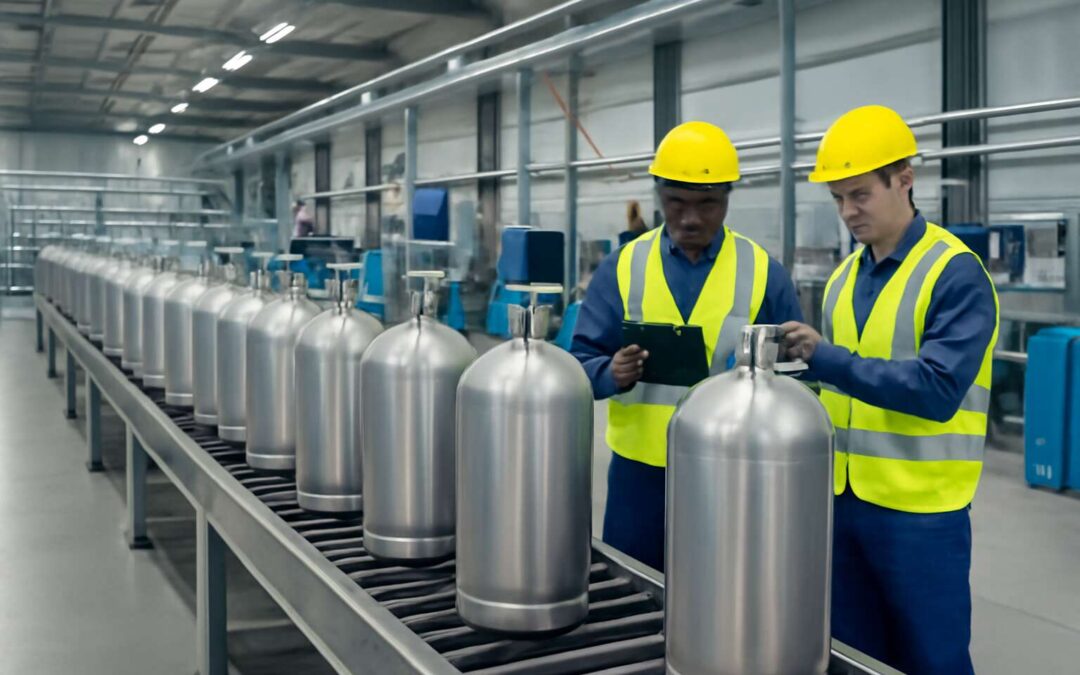
Gas Cylinder Manufacturing: Industry Overview and Trends
Market Dynamics and Key Players
South Africa runs on a surprisingly quiet backbone: gas cylinder manufacturing. The industry has logged roughly a 6% year-on-year uplift, a signal that safety, reliability, and durability still outshine novelty on the factory floor.
From mining sites to five-star kitchens, demand dynamics revolve around consistent supply, stringent testing, and end-of-life recycling. Gas bottle builders in SA are blending automation with safety to meet tight local standards while keeping costs in check.
Market players? A constellation of established manufacturers, capable fabricators, and regional suppliers collaborate to keep the cylinders compliant and traceable.
- Hydrostatic testing and quality control
- Material innovation and corrosion resistance
- Logistics, refurbishment, and refill networks
This synergy underpins the SA gas cylinder supply chain.
Global Regulation and Standards
Gas cylinder manufacturing stands as a quiet engine behind everyday life, where reliability meets artistry. Across South Africa, gas bottle builders weave automation with rigorous quality checks to keep pace with demand, yet never compromise safety. Industry trends favor materials that resist corrosion, smarter hydrostatic testing, and a recycling-minded outlook that extends a cylinder’s life from plant floor to end of life. In this landscape, performance and trust are the true luxuries.
Global regulation and standards set a precise tempo for the craft—marking, testing, and requalification must travel with every shipment.
- ISO standards for gas cylinders and their components
- Regional codes such as EN and regional adaptations
- SANS/SABS alignment with ISO to suit South Africa’s market
Production Capacity and Investment Trends
Across South Africa, roughly 2 million gas cylinders are quietly delivering reliability to kitchens, farms, and workshops, with turnover hovering near 7% each year as markets refresh stock and extend lifecycles. That pace demands bold investment without breaking the bank—and plenty of hustle from the design table to the factory floor.
Production capacity is expanding as gas bottle builders modernize lines, embrace automation, and source corrosion-resistant materials that shrug off SA’s briny air and rough handling. We see capacity unlocked by new inspection rigs, smarter hydrostatic testing, and streamlined logistics to keep pace with demand.
- Automation-led throughput gains and reduced cycle times
- Material innovations that extend cylinder life in harsh environments
- Near-shoring and local content to boost resilience
For the industry, the balancing act is real—speed with safety across every stage—from plant floor to end of life.
Sustainability and Safety Challenges
Across South Africa, roughly 2 million gas cylinders quietly keep kitchens and workshops running—yet the real story is how gas bottle builders balance safety with speed in today’s market.
The sustainability and safety challenge sits at the heart of modern production. Materials that resist salt air, smarter hydrostatic testing, and better inspection rigs reduce waste and extend life, while automation trims cycle times without compromising standards.
- Corrosion-resistant alloys and coatings
- Smart testing and non-destructive evaluation
- Smaller batch runs with strict QC
When life-cycle thinking guides design, the industry finds resilience from plant floor to end of life—and industry players are leading the charge!
Future Outlook and Innovations
Gas bottle builders sit at the edge of industrial poetry, where safety never sacrifices speed. In South Africa, kitchens and workshops rely on the steady rhythm of gas cylinders, and the people who manufacture them lean into a future where reliability is a feature, not a compromise. A plant supervisor once quipped, “We race the clock to protect lives,” and that mindset guides every weld and inspection.
The future sits on smarter QA, modular lines, and lifecycle thinking. Key trends include:
- Real-time nondestructive testing with IoT
- Modular, scalable manufacturing lines
- Advanced coatings and corrosion-resistant materials
- Digital twins and predictive maintenance
In this landscape, South Africa’s gas bottle builders balance domestic demand with export expectations, pushing for full traceability, faster turnaround, and compliance with international standards. The horizon holds recycled alloys, smarter coatings, and a reputational emphasis on safety that travels from the plant floor to the end of life.
Materials and Engineering for Gas Cylinder Production
Cylinder Materials: Steel, Aluminum, and Composites
Within the realm of material selection, a cylinder becomes a quiet spell of engineering. Steel, aluminum, and composites share the stage, each whispering a different promise of strength, weight, and longevity. For gas bottle builders in South Africa, the challenge is to harmonise yield, ductility, and surface protection while keeping costs in reach and production lines steady under demand.
An attentive engineer weighs how these materials behave under pressure and fatigue. Here are the contenders:
- Steel: robust, proven in high-pressure vessels; weldable with traditional methods.
- Aluminum: light, corrosion-resistant, but requires careful joint design.
- Composites: high strength-to-weight, complex curing and inspection.
Together, materials science and engineering craft cylinders that endure, inspection after inspection, in a market that never rests.
Manufacturing Techniques: Forming, Welding, and Testing
On the shop floor, every bottle lives by form, weld, and test. For gas bottle builders in South Africa, balance means strength without weight and dependable production under demand.
Forming sets the stage. Steel, aluminum, and composites each require different forming paths—hydroforming for uniform walls, spin forming for tight tolerances, and careful thickness control to keep manufacturing efficient.
Welding follows, with joint design dictating method. Welding choices hinge on material and joint design for SA manufacturers. Steel uses TIG or MIG welds; aluminum needs heat management; composites rely on bonded seams. Every weld tests heat, fit, and skill.
Testing closes the loop. Rigid hydrostatic tests, leak checks, and non-destructive inspection guard against hidden faults. Quality gates sharpen process discipline and reassure customers that cylinders will endure.
- Forming controls wall thickness and curvature
- Welding methods match material and joint design
- Testing regimes include hydrostatic, leak, and NDT
Corrosion Resistance and Longevity
One stubborn truth stands at the heart of gas cylinder engineering: corrosion is the sly thief of longevity. In South Africa, gas bottle builders must knit resilience to weight, confronting coastal salt air, mining dust, and abrupt temperature swings. The craft hinges on materials and engineering that marry form with ferocity against rust—steel, aluminum, and composites chosen for corrosion resistance and enduring performance. A single salt-spray test can decide the fate of decades.
- Strategic alloy choices and protective coatings tailored to SA environments
- Rigorous surface preparation and passivation to form lasting barriers
- Smart jointing and sealant systems that deter moisture ingress
Longevity flows from disciplined testing and steadfast quality control, translating into dependable cylinders that endure shop floors and field service. For South Africa’s demanding climate, metallurgical choices, coatings, and joints are harmonized to ensure resilience where it counts—every day, every voyage.
Weight Optimization and Performance Criteria
Weight is the quiet instrument in gas cylinder design. A lean wall mass, precisely tuned, can shave handling effort and fleet fuel use—a 2–3% gain that adds up quickly. In this field, materials and engineering choices set the tempo for strength, durability, and performance without compromise!
High-strength steels, aluminum alloys, and advanced composites anchor the weight-performance pact. Engineering criteria span burst margins, fatigue life, and impact resilience. Near-net-shape forming and optimized wall geometry reduce mass, while preserving safety. Finite element analysis and rigorous testing ensure every component meets real-world service needs for gas bottle builders.
In SA, climate extremes demand resilience across materials and coatings. A practical metallurgy strategy couples corrosion resistance with predictable forming behavior, so service life remains steady across coastal spray and inland heat.
- Weight-to-strength efficiency
- Fatigue life under cycles
- Wall integrity and processability
Repair, Rework, and Recycling Considerations
Across South Africa, refurbishment cycles on gas cylinders can extend service life by as much as 15%, quietly reducing waste and downtime in critical supply chains. For gas bottle builders, materials and engineering choices during repair, rework, and recycling set the tone for safety and end-of-life recoverability. Selection of high-durability steels, corrosion-resistant alloys, and controlled post-weld heat treatment ensures predictable performance after decades of service. Near-net-shape remanufacture and precise wall geometry help restore strength without piling on mass, while rigorous requalification testing confirms real-world resilience.
- Material traceability and life-cycle data
- Repair welding methods and heat-treatment compatibility
- Recycling-ready coatings and surface finishing
- Non-destructive testing and requalification protocols
Ultimately, the craft of gas bottle builders balances inherited metallurgy with forward-thinking recycling, turning what could be waste into value.
Manufacturing Processes and Quality Assurance
Tube Forming to Final Assembly Process
From raw tube stock to the finished cylinder, the route is defined by precision, not bravado. As one engineer notes, “Safety is the sum of every weld, test, and inspection.” For gas bottle builders in South Africa, the journey from tube forming to final assembly blends craft with engineering discipline, guided by exacting tolerances and traceability across every batch.
- Cutting and edge preparation to spec
- Forming and seam alignment under controlled pressure
- Neck finishing, valve seat prep, and final fit
Quality assurance spans inline gauging, hydrostatic and leak testing, and full batch documentation. Non-destructive testing and surface inspections ensure longevity and safety, aligning with ISO and SANS standards so each cylinder earns its certification before leaving the line.
Heat Treatment, Coating, and Surface Prep
In gas bottle builders’ workshops, heat treatment, coating, and surface prep are the quiet triad that define durability. A precisely timed furnace cycle relieves welding stresses, stabilizing the microstructure and preventing brittle failure under pressure. Fine-tuned cooling and controlled environments keep risks in check, ensuring the cylinder passes hydrostatic tests with confidence. The coating that follows adds corrosion resistance, while meticulous surface prep ensures flawless adhesion for the final finish.
- Heat Treatment: controlled tempering to optimize toughness and relieve residual stresses
- Coating: protective film applied after surface prep to guard against corrosion
- Surface Prep: cleaning, degreasing, and micro-roughening for coating adhesion
Quality assurance threads through every step: traceable heat cycles, batch coating records, and surface-prep parameters are logged and verified with nondestructive checks. The result is a predictable performance envelope for each cylinder, extending longevity and safety for end users.
Non-Destructive Testing Methods
In the workshops of gas bottle builders, safety wears a lyrical grace. South Africa’s industries rely on cylinders under pressure, and QA and nondestructive testing keep defect rates well under 0.5%. Each cylinder is a story of measured steps: forming, heat treatment, and surface prep, followed by traceable checks for reliability. The result is a calm guarantee that a handshake can be trusted when the valve opens!
Non-destructive testing methods are the quiet guardians of quality for gas bottle builders. A disciplined look at techniques reveals how integrity is read without taking the bottle out of service:
- Visual inspection for surface anomalies
- Ultrasonic testing to map internal echoes
- Radiographic or dye-penetrant methods for hidden flaws
- Magnetic particle testing where ferrous components are involved
Together with documentation, these checks define a predictable performance envelope that keeps end users safe and confident.
Quality Management Systems and Traceability
Manufacturing at our facilities reads like a careful apprenticeship in metal and policy. Every step—from billet receipt through forming, heat treatment, and final assembly—lives under a robust Quality Management System that aligns with international standards and local safety mandates. We see QA as a living compass, guiding decisions with data, not guesswork.
Traceability is the quiet backbone. Each cylinder carries a digital and physical passport: material certificates, batch numbers, inspection stamps, and an auditable change log. By weaving documentation into product flow, we maintain a transparent lineage that travels from shop floor to field, ensuring accountability and trust. For gas bottle builders, this is the difference between a number on a drawing and a reliable, tested cylinder ready for service.
- Raw material certification and supplier pre-approval
- In-process inspections and operator sign-off
- Final QA dossier with test results and traceable serials
Inspection and Certification Milestones
In South Africa, quality isn’t an afterthought—it’s the first line of defense. As one QA lead likes to say, “Quality is the cheapest insurance on the shop floor.” Gas bottle builders align structured Manufacturing Processes with a living Quality Assurance regime, turning risk into routine and ensuring cylinders are ready for field use from day one.
Key milestones anchor the process:
- Raw material certification and supplier pre-approval
- In-process inspections and operator sign-off
- Final QA dossier with test results and traceable serials
Digital and physical documentation bind the journey from shop floor to service, providing an auditable passport for every cylinder. For gas bottle builders, this discipline translates into cylinders you can trust, with every lot traceable and every change logged.
Standards, Compliance, and Certification for Cylinders
Industry Standards: ISO, DOT, ECE
“Safety is the first language of metal,” I remind the team as the forge cools and a cylinder takes its breath. In a market awash with choices, standards steer every seam and valve toward honesty.
For gas bottle builders, the trio of standards—ISO, DOT, and ECE—forms the backbone of certification, guiding material chemistry, wall thickness, and rigorous testing rituals.
- ISO: international safety and quality frameworks for design, manufacturing, and traceability.
- DOT: United States transport rules for safe handling and shipment.
- ECE: European agreements harmonizing cross-border cylinder safety requirements.
In South Africa, this global tapestry threads through local audits, certification bodies, and partnerships, weaving a trusted lineage from forging to filling that speaks to inspectors and clients alike.
Pressure and Safety Standards
“Safety is written in the metal,” a seasoned inspector once murmurs as a cylinder cools after the final test. Standards are the compass for gas bottle builders, guiding every seam, valve, and inspection in a market hungry for reliability.
In South Africa, compliance threads global frameworks through local audits, certification bodies, and partnerships. Cylinders carry formal traceability from forge to filling, with third‑party labs validating material chemistry, wall thickness, and hydrostatic and burst testing. A robust quality management system keeps records alive—so inspectors can verify every batch and every lot.
To streamline trust, many facilities employ a concise checklist:
- Material provenance and batch traceability
- Non-destructive examination and hydrostatic tests
- Independent certification and ongoing surveillance
Testing Protocols: Burst, Leak, and Impact Testing
“Safety is written in the metal,” a veteran inspector murmurs as gauges settle after a burst test. For gas bottle builders, Standards, Compliance, and Certification steer every burst, leak, and impact protocol—anchoring trust in a market hungry for reliability and verifiable provenance.
In South Africa, compliance threads global frameworks through local audits, certification bodies, and partnerships. Cylinders carry formal traceability from forge to filling, with independent labs validating chemistry, wall thickness, and hydrostatic and impact testing. A robust quality management system keeps records alive—so inspectors can verify every batch and lot. Gas bottle builders rely on a concise checklist:
- Material provenance and batch traceability
- Non-destructive examination and hydrostatic tests
- Independent certification and ongoing surveillance
For bursts, leaks, and impact, the testing protocols themselves are the warranty. Gas bottle builders must align with ISO, SANS, and local oversight, weaving a living fabric of compliance that reads truth in every cylinder.
Regulatory Reporting, Documentation, and Batch Traceability
Compliance isn’t a checkbox—it’s the warranty that travels with every cylinder. In South Africa, gas bottle builders navigate a dense lattice of ISO, SANS, and local oversight, weaving safety, provenance, and performance into a single, verifiable story.
Standards anchor reporting and documentation—the official ledger that proves origin and integrity. Regulatory reporting, meticulous records, and batch traceability from forge to filling are validated by independent labs and under ongoing surveillance.
- Certificate of conformity
- Batch release records
- Independent test reports
- Calibration certificates
These artifacts support auditable trails through the supply chain, ensuring every cylinder bears the truth of its lineage and the responsibility of its maker—gas bottle builders who treat documentation as a protective shield rather than paperwork.
Certifications and Audits: Obtaining and Maintaining Accreditation
Standards are the invisible rails guiding every forge of South Africa’s gas cylinder craft. For gas bottle builders, accreditation is not a finale but a living conversation with regulators, customers, and the cylinder itself. In a landscape lit by ISO, SANS, and local oversight, certification becomes the compass that aligns origin, integrity, and performance. “Compliance is not a burden; it’s the warranty that travels with every cylinder,” a veteran regulator reminds us. The journey from risk assessment to post-market surveillance is continuous—and essential.
Achieving and maintaining accreditation rests on three pillars: independence, traceability, and continual improvement. The core artifacts that prove your story include:
- Certificate of conformity
- Batch release records
- Independent test reports
- Calibration certificates
These documents turn production into a transparent biography, allowing audits to read the cylinder’s lineage at a glance. By embracing these standards, these builders earn trust beyond compliance—partners, inspectors, and end users share in the assurance.
Sourcing, Partnerships, and How to Choose a Cylinder Manufacturer
Capabilities Assessment: Manufacturing Capacity and Lead Times
In a market where reliability travels faster than rumor, procurement leaders note dependable partners win the race. For South Africa’s gas bottle builders, sourcing becomes a weave of local networks and steady, compliant materials.
Sourcing is more than price; it’s material integrity and supplier resilience.
- Material integrity and supplier diversification
- Predictable lead times and production cadence
- Certifications and traceability
Partnerships are choreography—long-term alignment with fabricators, logistics, and regulators. In SA, transformation and community investment often shape these bonds.
Choosing a cylinder manufacturer hinges on the capabilities assessment—manufacturing capacity and lead times.
- Capacity status versus demand
- Backlog and ramp-up potential
- Lead-time stability and variability
- Contingency options and subcontracting readiness
- Maintenance and traceability records
Quality Assurance and Vendor Selection Criteria
Sourcing for SA’s gas bottle builders is more than price; it’s a quiet vow to material integrity and supplier resilience. In a market where reliability travels faster than rumor, procurement professionals prize partners who weave local networks with compliant inputs and enduring quality.
- Local regulatory alignment and transformation commitments
- Transparent logistics frameworks and steady delivery support
- Proven material provenance and batch traceability to source
Partnerships are choreography—long-term alignment with fabricators, logistics, and regulators. In SA, transformation and community investment often shape these bonds, turning contracts into shared civic purpose and mutual accountability.
Choosing a cylinder manufacturer hinges on quality assurance and vendor selection criteria. A robust quality management system, regular audits, and transparent change control reveal a partner who supports safety and reliability—traits every gas bottle builders relies on.
Logistics, Supply Chain Resilience, and After-Sales Support
In the quiet hum of a SA workshop, reliability is a shadow that never leaves the floor. Sourcing for gas bottle builders isn’t just about price; it’s a vow to material integrity and resilience. We seek partners blending regulatory alignment, transformation, and transparent inputs into practice.
- Local regulatory alignment
- Transparent logistics frameworks
- Proven material provenance and batch traceability for gas bottle builders
Partnerships are choreography—long-term alignment with fabricators, logistics, and regulators. In South Africa, transformation and community investment shape these bonds, turning contracts into shared civic purpose and mutual accountability. For gas bottle builders, a true partner becomes part of the regional story, not just a supplier.
Choosing a cylinder manufacturer hinges on logistics, supply chain resilience, and after-sales support. Look for a robust quality management system, clear change control, and a network that keeps cylinders moving from plant to frontier towns. Here’s how to narrow the field:
- Reliable delivery frameworks and spare-parts availability
- Geographic diversification and disaster recovery planning
- Explicit service levels, warranties, and technical support reach
Costing Models and Value Engineering
That quiet heartbeat in a SA workshop—the moment a shipment lands on time—defines sourcing for gas bottle builders. It’s more than a ledger line; it’s a vow to material integrity. It begins with provenance, tracing inputs, coatings, and seals, and ends with regulatory alignment and transparent logistics. A resilient supply chain keeps cylinders moving, even when disruption looms.
Partnerships are choreography—long-term alignment with fabricators, logistics, and regulators. In South Africa, transformation and community investment shape these bonds, turning contracts into shared civic purpose. A partner becomes part of the regional story, offering visibility, accountability, and joint problem solving.
Choosing a cylinder manufacturer hinges on costing models and value engineering that preserve safety while optimizing value. Transparent change control, quality management, and a network that keeps cylinders moving from plant to frontier towns illustrate reliability in practice. The partner blends technical insight with practical constraints, turning capability into reliable service nationwide.
Vendor Evaluation Checklists and RFP Best Practices
A tight sourcing line is the difference between a smooth project and costly derailment. In South Africa, provenance and traceability aren’t buzzwords—they’re lifelines for gas bottle builders, ensuring inputs, coatings, and logistics align for safety and on-time delivery.
Partnerships are choreography: long-term alignment with fabricators, logistics, and regulators. Transformation and community investment shape these bonds in SA, turning contracts into shared civic purpose. A partner brings visibility, accountability, and practical problem-solving when disruptions threaten the route from plant to frontier towns.
Choosing a cylinder manufacturer hinges on prudent costing models and value engineering that preserve safety while optimizing value. Vendor evaluation checklists and RFP best practices keep the process transparent and auditable, surfacing real capability beyond glossy brochures.
- Objectives and metrics alignment
- Evidence of safety culture
- Regulatory alignment and attestations
- Pricing transparency and governance