
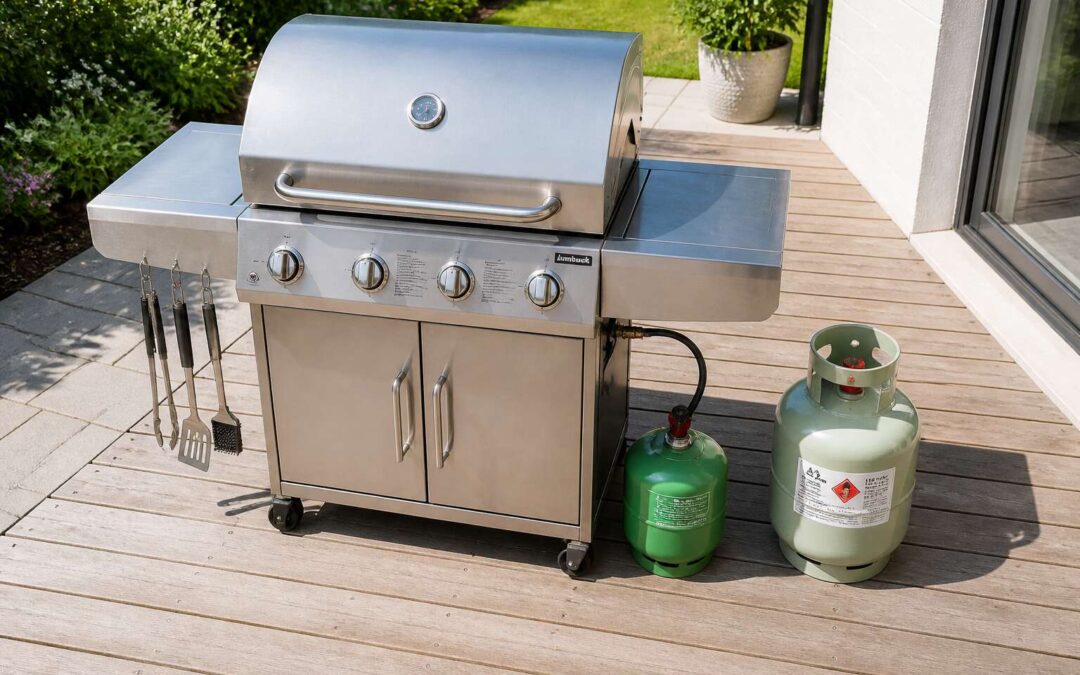
Gas Bottle Types and What They Mean for Barbecues
Patio Gas vs. Propane vs. Butane
It is a peculiarly South African dilemma, standing in the aisles of a hardware store, confronted by a row of steel cylinders. The answer to what gas bottle do i need for a barbecue is often hidden in the fine print of your regulator and the season. For the outdoor cook, the choice between Patio Gas and Propane is more than a simple fuel swap; it is a decision about reliability.
Patio Gas is a specific blend, a butane mixture designed for cooler climates and, crucially, for use with fixed bulk tanks or smaller cylinders. Its boiling point is higher, meaning it refuses to vaporise when the mercury dips. Standard Propane, by contrast, remains robust even in the bitter Highveld winter. It is a workhorse for high-output burners.
Butane does exist, but in South Africa it is a rare bird, a fuel for indoor heaters rather than the braai stand.
Here is the salient difference you must consider:
– Propane operates down to -42°C, making it the only viable choice for year-round outdoor cooking.
– Patio Gas performs best above 10°C and requires a different regulator, one that reverses the thread to prevent a fatal mix-up.
– Butane struggles below freezing, making it a fair-weather friend at best.
So, when you ask yourself what gas bottle do i need for a barbecue, you are really asking about your geography. If you are a Capetonian braaing in a Southeaster, Propane will not fail you. If you cook only under a midsummer sun, a Patio Gas cylinder might suffice, provided your appliance is correctly configured. Never assume the fitting is universal; check the valve before you commit to a purchase.
Standard Cylinder Sizes and Physical Dimensions
The typical South African braai master overlooks the physical footprint of the gas bottle, yet the dimensions dictate everything from storage to safety. When you ask what gas bottle do i need for a barbecue, the answer often rests on the familiar 9kg and 19kg cylinders. The 9kg variant stands around 530mm tall, a nimble companion for the tailgate or a compact patio trolley. The 19kg behemoth, however, pushes past 700mm and demands a stable, level surface, far from the footpath where a child might knock it over. Here is the reality of the common choices:
– The 9kg cylinder suits the casual weekend cook with a twin-burner unit.
– The 19kg cylinder feeds a four-burner rig with a side burner for hours without a freezing regulator.
– The 48kg bulk option is a permanent installation, intended for a built-in outdoor kitchen, not a mobile cart.
The valve placement also differs. A standard valve sits proud of the collar, while a POL fitting sinks lower, forcing you to measure the clearances on your barbecue frame. I have watched shoppers buy a 19kg cylinder only to discover their storage hatch sits just 680mm high. The physical dimensions, not the gas chemistry, become the limiting factor. Weight matters too. A full 19kg cylinder tips the scales at nearly 34kg, a serious lift for an average person. So the question of what gas bottle do i need for a barbecue narrows down to the raw geometry of your space, the muscle you can muster, and the appetite of your burners.
How Bottle Weight Indicates Remaining Gas
When I haul a 9kg cylinder onto my bathroom scale, I have to double check the reading. The tare weight, stamped into the steel collar, is the key figure that braai fans forget. Steel bottles dominate the local market, forcing a physical calculation every time. Composite cylinders, however, let you see the remaining fuel through their translucent walls.
To determine your exact fuel level from a steel bottle, follow these steps:
- Place the cylinder on a scale.
- Read the total weight.
- Subtract the tare weight from the reading.
The difference is your remaining gas in kilograms.
So when you ask what gas bottle do i need for a barbecue, remember that the cylinder’s shell dictates your measurement process.
Disposable Cartridges vs. Refillable Cylinders
The choice between disposable cartridges and refillable cylinders reshapes your entire braai routine. Disposable cartridges grant portability for a seaside outing, yet they generate litter and cost more per kilogram of fuel. Refillable cylinders demand a higher upfront payment, but they tie into the local LPG exchange network. When you ask what gas bottle do i need for a barbecue, the answer usually depends on how often you light the burner! I have watched casual hosts struggle with a half-empty cartridge mid-party, while dedicated grillers appreciate the predictable volume of a refillable.
The valve systems reveal the real difference. Disposable cartridges use a simple self-sealing mechanism perfect for small stoves. Refillable cylinders require a regulator and a proper connection to your barbecue’s hose.
Here is a practical breakdown:
- Disposable: light, no deposit, single use.
- Refillable: hefty, refundable deposit, economical per cook.
Your usage frequency dictates the correct pick.
Recognizing the Right Gas for Your Regulator
Nothing kills a braai faster than the hiss of gas escaping from a mismatched valve. Roughly a third of new gas bottle buyers bring home a cylinder that cannot connect to their existing regulator. Understanding bottle types prevents that mistake before you light the burner.
South African cylinders fall into two seating styles. The clip-on valve, common on household bottles, locks with a firm push onto the regulator. The screw-type collar requires turning until it seats. Neither is superior; each pairs with a specific regulator head. When you ask what gas bottle do I need for a barbecue, inspect the collar first. The shape reveals which bottle it accepts. A quick glance saves the awkward return trip to the dealer.
Matching the Bottle to Your Barbecue’s Connection
Clip-On Valves and Screw-On Valves Explained
A single misjudged connection can turn your evening braai into an exercise in frustration. The valve type on your barbecue regulator determines what gas bottle do i need for a barbecue, and the two main systems are clip-on and screw-on. Clip-on valves snap onto a recessed port, common on smaller butane cylinders used for camping stoves. Screw-on valves use a threaded collar that tightens clockwise, standard on propane bottles from 9kg upwards in South Africa.
Inspect your barbecue’s inlet before buying. A metal spring ring means clip-on. Internal threads mean screw-on, which is the dominant standard for patio gas. Forcing a bottle into the wrong connection risks leaks and wasted gas, so match the valve to your existing regulator, not the other way around.
Regulator Pressure Ratings and Barbecue Compatibility
Ask yourself what gas bottle do i need for a barbecue, and the honest answer hides on your regulator’s stamped face. Low pressure regulators, standard for braais, run at 2.8 kPa. High pressure units, around 50 kPa, belong with gas torches or lanterns. I always match that number before anything else. A 9kg propane bottle works with a 2.8 kPa regulator for most household grills, while a 19kg cylinder supports larger burners or longer cooking sessions.
Compatibility also depends on vapour delivery from the cylinder. Refillable bottles provide steady draw for multiple burners. Verify your regulator against these points:
- The cylinder’s valve must match your regulator’s connector, either clip-on or screw-on.
- The bottle’s refill valve must be in good condition to prevent pressure loss.
- The regulator must clearly state 2.8 kPa on its body.
Hose Length, Thread Size, and Fitting Types
Most home cooks ask what gas bottle do I need for a barbecue and stop right there. The real question is the connection, the hose, and the threads. Hose length determines where you can park the cylinder. I keep a 9kg bottle close to the braai with a 60 cm hose. A 19kg bottle, tucked into a corner, needs a longer coiled hose.
Thread size separates the calm from the panicked. South African regulators commonly use a 1/4 BSP outlet. Imported grills sometimes use metric threads. Fitting types vary:
- A hose barb with a jubilee clip, simple and reliable
- A swivel nut that threads onto the regulator
- A quick coupler for fast disconnects
The fitting must match your regulator. When you ask what gas bottle do I need for a barbecue, remember the bottle is only the start. The connection completes the system.
Checking the O-Ring and Sealing Surfaces
Most gas leaks happen at the seal, not the cylinder. I have watched friends wrestle with regulators for an hour, only to discover a cracked O-ring. When someone asks what gas bottle do i need for a barbecue, I tell them the bottle matters less than the rubber ring that connects it.
The sealing surface on the valve stem must be clean and smooth. A single grain of sand can lift the O-ring. Run a finger across the surface. If it catches, wipe it or replace the washer. Give these a quick look:
- Check the O-ring for tears or flattening
- Inspect the valve face for nicks
- Apply light pressure when tightening, never force
Match the bottle to the barbecue by matching the sealing profile, not just the thread. A cylinder can look compatible and still weep gas slowly. That quiet hiss is the sound of your money escaping!
Signs Your Regulator Needs Replacing
The bottle and barbecue connect through a precise profile. A thread that fits is only the beginning. The valve face must align with the regulator’s mating surface, and the cylinder’s neck must match the barbecue’s bayonet or clip. In South Africa, mismatched POL and quick-release fittings appear often. Ask what gas bottle do i need for a barbecue and you will hear about litre capacity, but the actual requirement is a bottle whose valve matches your regulator’s locking mechanism.
Your regulator has a finite life. Rubber diaphragms harden, springs lose tension, and the output pressure drifts. Watch for these signs:
- Flames that flicker yellow instead of blue
- A smell of gas with the cylinder closed
- A hissing sound that stops at the regulator
These symptoms mean replacement, not repair. A worn regulator can deliver too little gas or too much, creating a flare-up. Neither is acceptable for a braai.
Sizing Your Gas Bottle for Cookouts and Cooking Style
Grill Size and BTU Consumption per Hour
The real answer to what gas bottle do i need for a barbecue rests on your grill’s BTU consumption per hour. A compact two burner might use 8,000 BTUs, while a large six burner unit can exceed 40,000 BTUs during a hot sear. This figure dictates how many hours your cylinder lasts.
Your cooking style matters too. A quick braai of chops and wors uses less fuel compared to a slow, all afternoon roast at a low temperature. Reliable cookouts for a large crowd with multiple zones will empty a 9kg bottle quickly. For steady, low and slow sessions, the same bottle stretches further.
To size the bottle correctly, estimate your typical usage:
- List your grill’s maximum BTU rating.
- Multiply it by your average cooking hours.
- Divide the total by the gas’s energy content per kilogram.
This calculation often points to a 19kg bottle for high BTU grills, answering what gas bottle do i need for a barbecue in practice to avoid mid cookout refills.
Estimating Average Runtime for Popular Cylinder Sizes
A cookout’s true measure begins before the flames appear. For anyone asking what gas bottle do i need for a barbecue, the answer lives in the blend of cooking style and cylinder size. A 9kg bottle on a two burner at a simmer can stretch across a Sunday, while the same bottle under a six burner sear will vanish in a few sessions!
Estimating average runtime for popular cylinder sizes depends on your heat settings:
- 4.5kg bottle: 3 to 5 hours on medium
- 9kg bottle: 7 to 10 hours on medium, 4 to 6 hours on high
- 19kg bottle: 15 to 20 hours on medium, 9 to 12 hours on high
These figures shift with wind and how often you lift the lid. An all afternoon braai will demand a heavier bottle. The 19kg cylinder answers what gas bottle do i need for a barbecue without the mid cookout panic.
Small Portable Grills vs. Large Freestanding Models
A beach portable gas grill will not need the same capacity as a freestanding six burner for a township cookout. So what gas bottle do i need for a barbecue? For small portable grills, a 4.5kg cylinder provides enough fuel for a few hours. For large freestanding models, you want a 9kg or 19kg bottle to prevent a mid cookout trip to the petrol station.
Your cooking style changes the calculation. If you sear steaks on high, the tank empties quickly. If you smoke ribs low and slow, the gas lasts longer. Consider this simple breakdown:
- Small portable grill: 4.5kg for light use
- Large freestanding grill: 9kg for average cookouts
- Large plus high heat: 19kg for the serious braai master
That gives you the direct answer to what gas bottle do i need for a barbecue. Match the cylinder to the grill’s fuel requirements, and your lunch stays on schedule.
Using a Spare Bottle for Extended Cookouts
When you ask what gas bottle do i need for a barbecue, sizing depends on how you actually cook. A Sunday braai with high flames for boerewors will drain a 4.5kg cylinder faster than gentle low heat for lamb chops. I have seen backyard chefs run dry halfway through a birthday party because they underestimated their own heat. Match the bottle to your cooking style, not to the grill size alone.
- Quick searing at full flame demands more gas per hour.
- Slow roasting with the lid down stretches every kilogram.
- Long cookouts with multiple courses need reserve capacity.
Using a spare bottle for extended cookouts removes the panic. A second 9kg cylinder, kept cool and connected, keeps the flames alive when the first bottle sputters. For larger gatherings, swap mid cookout without losing temperature. Ask what gas bottle do i need for a barbecue and the honest answer includes a backup. The extra weight is worth the certainty!
Weather Conditions and How They Affect Gas Usage
Cooking style dictates the base demand when you ask what gas bottle do i need for a barbecue. Searing steak burns through a 4.5kg bottle in under an hour at full flame. Roasting a chicken with the lid down stretches the same gas across an afternoon.
Weather conditions alter the numbers. Cold air thickens the liquid propane, lowering pressure. Wind strips heat from the grill, forcing the burner to stay open longer. The effects stack up:
- Lower pressure means less vapour reaches the burner.
- Heat loss forces the regulator to stay open longer.
- Gusts cool the food, extending total cook time.
A 9kg cylinder offers a buffer against these forces. It keeps output steady in gusty conditions. I check the evening forecast before choosing my bottle. The answer to what gas bottle do i need for a barbecue changes between a calm summer day and a chilly Highveld evening.
Safety Rules for Storing, Transporting, and Using Gas Bottles
Ventilation and Clearance Around the Cylinder
In my years observing South African backyards, the gas bottle rarely gets the respect it demands. For anyone asking what gas bottle do i need for a barbecue, the answer must include safe storage and transport. Keep the cylinder upright in a well ventilated space, never under the sink or in a closed cupboard. A faint hiss or smell should send you outside immediately.
Ventilation around the cylinder prevents a silent build up. Position the bottle with at least a metre of clearance from any heat source, and keep the valve face free from dust and cobwebs. During car journeys, secure the vessel so it cannot roll, and crack a window to avoid accumulating fumes.
Consider these non negotiables:
- Always store spare cylinders outdoors, off the ground.
- Close the valve before disconnecting the regulator.
- Inspect the rubber hose for cracks before lighting.
Safe Transport Positions and Vehicle Rules
Every year, emergency services respond to vehicle incidents caused by gas cylinders that were never secured. When you ask what gas bottle do i need for a barbecue, the answer should include how that bottle travels.
I have seen bottles rolling around in boots. A cylinder always rides upright. On its side, liquid gas can reach the safety valve and cause a dangerous discharge. Use a purpose built crate or a firm bracket in the boot.
For bakkie owners, tie the bottle against the load bed wall with heavy duty straps. Never use rope that stretches.
In a closed vehicle, open two windows and switch off the engine when loading. A hot car can raise internal pressure beyond the relief valve’s comfort zone.
Follow these transport rules:
- Never transport a cylinder on its side.
- Keep the valve cap tightened during transit.
- Open a window if the bottle shares the cabin.
Leak Checks with Soapy Water
Once the bottle arrives home, the question of what gas bottle do i need for a barbecue transforms into a question of how to keep it safe. A cylinder must stand upright on a paved surface. Keep it clear of the afternoon sun and the direct heat of the braai. Heat builds internal pressure, and pressure finds any weakness.
The most reliable method for finding that weakness is a soapy water leak check. Mix a few drops of dishwashing liquid into a spray bottle filled with water. Spray the valve, the regulator connection, and the hose ends. A slow cluster of bubbles reveals a leak.
- Spray the valve stem and the brass nut.
- Spray the hose crimps at both ends.
- Watch for thirty seconds.
A fast stream of bubbles means a loose fitting or a damaged seal. When you ask what gas bottle do i need for a barbecue, this test is the proper answer. Soapy water never lies.
Recognizing Rust, Dents, and Expired Bottles
Before you ask what gas bottle do i need for a barbecue, learn to read the steel cylinder itself. Rust is the critical threat. A thin layer of surface rust may appear harmless, yet it can hide thinning walls. Dents carry a different risk. A significant impact weakens the vessel along a crease, and that crease becomes the fracture line under pressure.
- Check the test date stamped on the collar or foot ring.
- Inspect for rust flakes, pitting, or deep discoloration.
- Reject cylinders with dents deeper than a few millimetres.
Store the bottle upright on a paved surface in a shaded, ventilated spot. The afternoon sun raises internal pressure, so keep the cylinder away from the braai’s direct heat. When you determine what gas bottle do i need for a barbecue, confirm it passes these checks before connecting anything to its valve.
Disposal, Exchange, and Refill Options
Rolling an unsecured gas bottle in your boot is reckless. Secure it upright, keep a window open for ventilation, and drive straight to your braai. Never test the valve with a lighter to see if any gas remains. That is a legend, not a life hack.
Once the bottle runs dry, you have three options:
- Swap it at a petrol station exchange point, no waiting around.
- Get it refilled at a certified gas retailer if the test date is still current.
- Drop it at a municipal collection site for proper disposal, never in the landfill.
Exchange programs are the fastest answer to what gas bottle do i need for a barbecue, because the retailer handles the heavy lifting and the paperwork. Refills cost less but demand patience and a valid cylinder. Disposal is the boring adult duty that keeps your neighbours alive. Choose wisely, and remember that the flame should always be off before you disconnect anything.
Practical Tips for Choosing Between Gas Bottle Sizes
Interior Storage Restrictions for Balconies and Apartments
The question of what gas bottle do i need for a barbecue changes when the balcony is small. The real constraint is not the grill, it is the fire safety rules in your building’s constitution. Many sectional title schemes in South Africa cap cylinders at 9 kg on balconies, and some prohibit them altogether. Read the rules before you purchase, and confirm with the building manager.
Measure the space with the door shut. You need 300 mm of open air around the cylinder, and the valve must stay reachable. A 9 kg bottle fits most small balconies; a 19 kg model often does not. Carry distance from the parking bay to the lift matters, since moving a heavy cylinder up stairs changes the practical choice.
Look at the floor too. The bottle needs a flat, stable surface, never carpet. If the space fails any check, the answer to what gas bottle do i need for a barbecue becomes a smaller cylinder, even if it means more refills.
Weight and Mobility for the Average Home Chef
The average home chef often asks what gas bottle do i need for a barbecue when facing the gap between the car boot and the braai stand. A 9 kg cylinder weighs around 15 kg when full. That load feels fine on a flat driveway but transforms into a challenge after three flights of stairs. Your back will answer the question more honestly than any spec sheet.
The mobility check comes down to honest questions:
- Does your route from storage to the grill include steps?
- Can you lift the full bottle to waist height for valve access?
- Will you be carrying it weekly or monthly?
A 19 kg bottle cuts refill trips in half but doubles the strain. Most home chefs settle on 9 kg for the balance. The person who actually moves the cylinder should decide what gas bottle do i need for a barbecue, not the person who only cooks with it.
Comparing Rental Costs vs. Purchasing a Cylinder
The honest answer to what gas bottle do i need for a barbecue depends on how much gas you burn and which sizes your supplier carries. Rental companies in South Africa commonly offer 19 kg and 48 kg bottles, while shop shelves sell 5 kg and 9 kg cylinders for purchase. Swapping a rented bottle means no test dates or corrosion worries. The catch is that rental fees keep piling up even when your braai stand sits idle for months.
Practical tips help here!
- Track your refill frequency for three months before committing.
- Compare the rental deposit against the purchase price.
- Ask whether the supplier refunds deposits on returned bottles.
Seasonal grillers usually purchase a 9 kg cylinder. Weekly grillers rent the 19 kg. I have watched too many people rent a bottle for two braais a year, only to pay rental fees all winter.
Using Adaptors to Connect Different Bottle Types
Choosing between a 9 kg and a 19 kg bottle often comes down to your braai frequency. A simple rule: if you cook more than twice a month, the bigger cylinder saves you from running out mid-braai. For the occasional weekend cook, the smaller bottle wins on storage and weight.
Adaptors let you connect a different bottle type to your existing regulator, but confirm the thread size and pressure rating first. A mismatch turns a quick swap into a dangerous leak. Check the adaptor’s seal each time, and never force a connection that does not fit. When in doubt, ask your gas supplier to verify compatibility. That is how you solve what gas bottle do I need for a barbecue without guesswork.
Seasonal Demand and Swap Availability
Winter in South Africa turns gas supplies into a commodity. Demand for cylinders spikes in July, and swap stations empty out faster than you can light a match. The exact question of what gas bottle do i need for a barbecue only becomes urgent when the 9 kg shelf is bare.
Seasonal peaks reshape the market. Bigger cylinders disappear first because they last longer between exchanges. Your local supplier’s swap availability matters more than your cooking habits. Some stations refill on the spot, others send cylinders away for days.
- Call three gas dealers in May to compare winter stock levels.
- Ask if exchange includes a full cylinder or a partial one.
- Verify whether you can reserve a 19 kg unit before the rush.
That extra storage space gives you a buffer. Choose a size based on the supply rhythm, not your average meal count. Then you solve what gas bottle do i need for a barbecue with your eyes open.