
Understanding Gas Bottle Refills
Common Types of Gas Bottles
In South Africa, millions of households rely on bottled gas for daily cooking and heating, yet most cannot tell a 9kg from a 19kg cylinder. Understanding gas bottle refills requires a basic grasp of cylinder construction and safety protocols. The most common mistake people make is assuming all bottles are interchangeable.
- Standard 9kg cylinders for home stoves
- 19kg cylinders for larger appliances or extended use
- 45kg industrial bottles for commercial operations
When you search for a refill gas bottle near me, the attendant will check for dents, rust, and valve damage before topping up. I have seen good bottles rejected because the collar was warped. Know your bottle’s history to avoid wasted trips.
Refill vs Exchange Programs
Refill services keep your cylinder in circulation. Exchange programs replace it entirely. Neither option is inherently better. It depends on your bottle’s condition, your budget, and your patience.
When you type refill gas bottle near me into your phone, you are looking for a service that weighs your cylinder, tops it up, and charges for the litres added. Exchange counters operate faster, but you surrender your bottle without knowing its history. A swapped cylinder may have been dropped, overfilled, or left in the sun.
The practical choice varies by area. Some towns have only exchange points. Others have dedicated refill depots. I always carry my own bottle to a refill station when possible, because I know exactly what is inside. Before you commit to either route, consider:
- Your cylinder’s test date. Expired bottles cannot be refilled.
- The valve condition. Exchange accepts almost anything.
- Cost per kilogram. Refilling generally wins.
That awareness turns a simple search for a refill gas bottle near me into a smarter purchase.
Understanding Gas Weights and Capacities
Filling a bottle is straightforward, but understanding what you are actually paying for changes everything. Gas is measured by weight, not by the volume of liquid sloshing inside the cylinder. The tare weight, usually stamped on the neck or foot ring, tells you the empty cylinder’s mass. The gross weight is the total when it is full. The difference is the liquefied petroleum gas you use for cooking or heating.
A standard 9kg bottle, for example, has a tare weight around 11.5kg. When fully charged, it should tip the scales at roughly 20.5kg. This calculation matters when you search for a refill gas bottle near me. A dodgy operator might charge you for a “full” cylinder that only weighs 19kg. That single kilogram difference represents a significant chunk of missing fuel, which means your geyser takes longer to heat or your braai runs out mid- cook.
Understanding capacities also extends to how gas behaves. LPG expands in heat and contracts in cold, so a bottle is never filled to absolute capacity. It is filled to around 80% of its volume to allow for expansion. This is why you feel a sloshing sensation when you pick up a newly refilled cylinder. The weight is the only reliable truth. The tare weight, the gross weight, and the circumstances in South Africa’s climate, where a summer day can push temperatures to 35 degrees, all dictate how much usable energy you carry home. Checking your cylinder’s tare weight before you go and demanding a scale reading at a refill gas bottle near me turns a simple errand into a transaction you can verify.
How to Find Local Refill Providers
Using Online Maps and Directories
The digital map is a necessary tool. Type the phrase refill gas bottle near me into Google Maps, and the results reveal your options. But not every listing is a true provider. Some are exchange points; others are depots that only service commercial accounts.
For residential customers, the trick is to filter deliberately. Look for suppliers with physical addresses and multiple reviews. Check if the business mentions refilling on site, as opposed to merely swapping cylinders. The distinction matters when you are hauling a heavy tank across town.
- Search for “gas refill stations” to narrow results.
- Cross-reference with the supplier’s own website.
Local directories like Yellow Pages SA can also point you toward smaller operations that do not rank highly on Google. Call ahead. A voice on the line confirms what the map cannot show, that the refill gas bottle near me is a practical destination.
Checking with Local Hardware Stores
Hardware stores are the unsung heroes of the gas world, often overlooked in the digital scramble for a quick swap. While the big-box retailers focus on moving you through a queue, the smaller, older establishments sometimes run a quiet side business in cylinder refilling. It is not uncommon for a dusty counter at the back of a tool shop to hide a fully operational refill station, waiting for someone to ask the right question.
When you walk into these places, you are doing more than just hunting for a refill gas bottle near me. You are tapping into a network that predates the internet. The staff at these local operations usually know the supply chain intimately. You can often score a better price because you are cutting out the middleman, but the real charm is the absence of crowds. There is no beeping of scanners, just the clunk of metal and a receipt written by hand.
Before you load up the boot, consider what to ask:
- Confirm they refill on site instead of sending your bottle off to a depot.
- Ask about turnaround time, as some stores only fill on certain weekdays.
- Check if they handle the certification paperwork for pressure tests.
Calling ahead saves you a wasted trip, and hearing a human voice on the line beats staring at a static listing. The next time you search for a refill gas bottle near me, skip the crowded forecourt and try the shop with the rusted sign out front. You might just find the most efficient supply line in the neighbourhood, run by a person who knows your gas usage better than you do.
Automotive and Camping Supply Outlets
The most reliable refill gas bottle near me can often be found where the tar meets the trail. Automotive supply shops and camping outfitters hold a strange advantage in the gas economy. They cater to people who need fuel for survival, not just convenience. The overlander with a dual cylinder setup or the caravan owner who refuses to stay in commercial parks, they drive the demand. The staff at these outlets tend to have a practical, almost obsessive knowledge of their stock. They can tell you if your regulator is leaking before you even ask. They handle LPG with a respect that comes from seeing the consequences of carelessness.
Stopping at a petrol station forecourt or a dedicated 4×4 accessory store introduces a different set of logistics. You are not dealing with an anonymous warehouse worker. You are dealing with a technician or an enthusiast. The stock moves faster here, which means the cylinders are often in better condition. In the automotive sphere, the focus is on portability and range. Camping outlets, conversely, understand the dynamics of a long stay in the bush. The refill gas bottle near me search becomes less about the product and more about the expertise of the person behind the counter.
– Look for a station that offers a visual inspection of the bottle before filling.
– Ask about the water capacity and whether they adjust the fill weight for the season.
– Inquire if they stock spare valves and seals for immediate replacement.
There is a quiet psychology to trusting someone with a pressurised vessel. You are placing your safety in the hands of a stranger based on a sign in the window. The best providers build a relationship through consistency. They remember that you have a small Cadac bottle and they do not try to upsize you. They understand that your cylinder is not just a tank, it is a unit of autonomy. Finding that outlet transforms a mundane errand into a confident transaction)Skip the nearest auto parts superstore and dig for the smaller dealership that services off-road vehicles. The difference is tangible when you get there. The air smells of rubber and grease instead of stale coffee. The scale is not digital; it is a heavy mechanical one that clunks when it settles. That sound is verification. The process becomes clear, measurable, and honest. You see the weight before and after, which builds a different kind of trust than a plastic receipt ever could. This is the true value of finding a refill gas bottle near me that operates beyond the purely commercial.
Asking for Referrals from Neighbors
Your neighbours have already solved this problem. The family across the street with the gas braai and the retiree who disappears into the bush every month, they know exactly where to go. Ask them directly. People enjoy sharing a reliable supplier because it makes them feel like insiders. You will often discover that the best refill gas bottle near me is a modest outlet that has quietly served the same community for years.
I have learned that a simple question at the next street braai or in the neighbourhood WhatsApp group works better than any search. You are looking for consistency, not convenience. A neighbour who has refilled the same cylinder for five years without complaint offers more real information about a refill gas bottle near me than any online directory.
- Ask about their typical waiting time. Some outlets fill on the spot while others require drop offs.
- Find out if they charge by weight or by a fixed fee.
That local knowledge saves you from the trial and error nobody enjoys.
Evaluating Refill Service Quality
Certification and Compliance
The difference between a proper refill and a silent hazard often comes down to a stamp on a form. In South Africa, the Pressure Equipment Regulations demand that any refill gas bottle near me meets the South African Bureau of Standards requirements. Yet many operators treat compliance as a suggestion, not a rule.
Certification proves that the cylinder has been inspected, the valves checked, and the scales calibrated. Compliance goes further. It covers staff training and record keeping. I once watched a technician skip a leak test, assuming no one would notice. The certificate on the wall said otherwise. Quality signals include:
- An exposed SABS certification document
- Clear display of the last hydrostatic test date
- Workers who let you watch the weighing process
Without these, your hunt for a refill gas bottle near me turns into a lottery. And nobody enjoys buying a ticket for a fireball.
Pricing Structures and Hidden Fees
Price is the easiest thing to compare, and the easiest to be fooled by. When I check pricing for a refill gas bottle near me, I ask about the weight basis first. Some quote per kilogram, others per bottle, and those numbers diverge once you subtract the tare weight.
I also watch for quiet charges. A service fee that appears only at the till. A deposit on the empty cylinder nobody mentions until you return.
Here is what separates a fair quote from a padded one:
– Gas price quoted per kilogram, visible before you commit
– Tare weight written on the cylinder, not withheld
– Extra costs named before payment
A clean breakdown tells me the operator respects my time. A vague number does not. The best refill gas bottle near me offers a precise invoice, because precision in pricing usually means precision in the gas itself.
Turnaround Time and Convenience
The quietest measure of a gas depot is not the price on the board, but the pace of its queue. I have waited twenty minutes for a cylinder that took four to fill, and that gap speaks to how a business values your hour. A refill gas bottle near me should offer a turnaround that respects the tempo of a working day.
Convenience stretches beyond the counter. Look for a station that operates when you actually need it, and not just during banker’s hours. The best operations keep their weighing scales visible and their process swift.
- Rapid intake and departure, no numbered ticket systems
- Staff who know the difference between a 9kg and 19kg cylinder instantly
- Clear signage for the dedicated refill lane
That kind of efficiency turns a necessary chore into a minor interlude. When the wait feels negligible, you know you have found a refill gas bottle near me that treats your time as seriously as the gas itself.
Customer Reviews and Reputation
A gas depot’s reputation often precedes it, but in my experience, the character of a business is best judged by the silence of its regulars. When you pull up to a refill gas bottle near me, you are not just buying fuel, you are entering a social compact. The customers waiting there are a living archive of the establishment’s history, and their patience or their restlessness tells you everything.
Online reviews can be misleading, too often written in the heat of a moment that has little to do with the actual product. Pay attention instead to the quiet cues. I always look for the corroded valve on a returned cylinder, which speaks to whether the staff actually inspect their gear, or merely shrug and take your money. The condition of the queue is also telling.
– The state of the empty cylinders left outside the door.
– Whether the staff address you by name after the second visit.
– The presence of a brass fitting that has been polished to a shine.
These are the details that define a self-respecting operation. A five-star rating matters little if the man behind the counter refuses to check the hydrostatic test date on your old tank. That refusal is a glimpse into their standards, and it is a glimpse you should not ignore. The best places have a quiet confidence, they do not need to boast because their customers do it for them. So when you search for a refill gas bottle near me, look for the depot that has earned its stripes through small, consistent gestures of competence. The one where the regulars nod at you as you enter, a silent acknowledgement that you have chosen well. It is a subtle dance, but once you learn the steps, you will never settle for less.
Testing and Inspection Services
A”hydro test” gets thrown around like confetti at a carnival, but the sad truth is most customers have no idea what it involves. When you find a refill gas bottle near me that actually conducts a proper inspection, you have found a rare bird indeed. The process is straightforward if the staff know their trade. They check the cylinder’s neck for the stamped date, which reveals the last time the vessel was pressure tested. They examine the threads for galling and the valve stem for any signs of leakage. This is not cosmic engineering, it is simple diligence.
The concerning part is how many depots skip the essential checks. A proper facility will perform a visual inspection for dents, rust pitting, and burn marks. They will also verify the tare weight, which tells them exactly how much gas remains in a supposedly empty bottle. Many operations will simply replace the O-ring and call it a day. That approach is a recipe for a surprise on your braai deck. The rubric for a quality depot should include:
– The technician uses a spanner to torque the valve, not pliers.
– The filler looks for the current test date stamp on the collar.
– The scale is calibrated and read before the gas flows.
– The bottle is weighed again after filling to confirm the exact amount.
You want a place that treats the exchange as a transaction of safety, not a routine swap. The most telling moment is when they refuse a bottle because the shank is worn or the foot ring is cracked. That refusal is a sign of a business that understands liability. A fly-by-night depot will accept anything with a valve, because they value the sale over your well being. When you search for a refill gas bottle near me, ask to see the inspection sheet. If you get a blank stare, you have your answer. If they show you a log with dates and signatures, you have found a professional. The mark of a serious operator is the quiet discipline of the checklist.
The Step-by-Step Refill Procedure
Preparation and Safety Checks
Nobody wants to be the person who presents a cylinder that looks like it survived a meteor impact. Preparation starts before you even drive to the station. Give your gas bottle a thorough once-over, because a gas dealer will refuse anything with visible dents or rust. That is not rudeness, it is self preservation.
While hunting for a refill gas bottle near me, remember safety checks. The valve deserves special attention. If it leaks, you will smell trouble before you see it. Do not be clever and use a lighter to test. That move never ends well.
- Check the valve seal for cracks
- Ensure the date stamp is current
- Remove any accessories or regulators
Empty bottles feel light, but that does not mean they are devoid of pressure. Crack the valve slightly to release residual gas, always outside and away from flames. Then you are ready for a clean fill.
Connecting the Bottle to the Refill Station
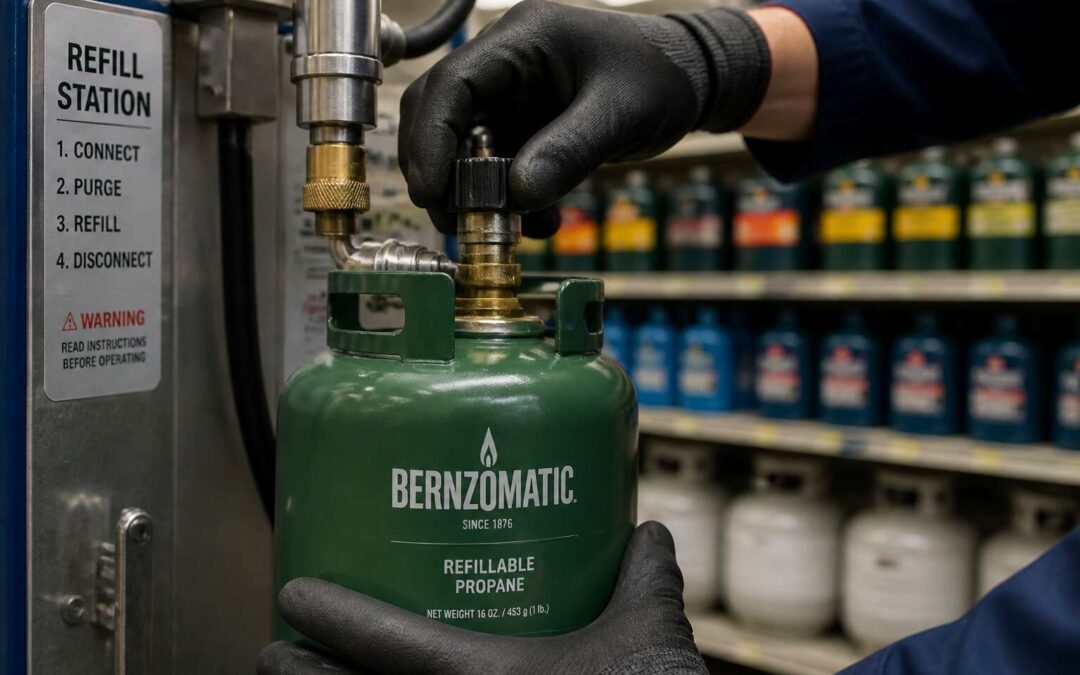
Standing at the refill station, the hiss of pressurized gas is a sound of quiet efficiency. Connecting your bottle correctly transforms a mundane errand into a transaction of pure utility. You have already inspected the cylinder, so now it is time to align the coupling. Most stations use a standard acme thread or a clip-on connector, depending on the valve type. Position the bottle on a flat, level surface and remove the protective cap. This exposes the valve, which is your point of contact.
The operator will attach the filling hose to the valve. This step is a marriage of metal and rubber, requiring a firm, deliberate push or a clockwise turn until snug. Do not over-tighten. The seal does the work, not your brute force. When you ask for a refill gas bottle near me, the staff handles this, but you should watch the connection for any immediate signs of misalignment.
Before the gas flows, the system performs a purge. This clears air from the line, ensuring you receive pure LPG, not a diluted mixture.
– Confirm the fill hose is not kinked.
– Ensure the bottle remains upright throughout the process.
– Keep your hands clear of the valve opening.
With the coupling secured, the operator opens the valve on the bottle itself. Then, the main supply opens. The pump hums, and you will see frost begin to form on the metal. This is the physical sign of liquid gas expanding and cooling the cylinder. The process runs on a trip mechanism or a weight scale, which is a safety feature to prevent overfilling. Once the machine trips, the operator closes the main valve and then the bottle valve. This sequence matters. Releasing the residual pressure in the hose before disconnecting prevents a sudden spray of gas. You will hear a brief vent, which is normal. Disconnect the hose and replace the dust cap. Your bottle is now a vessel of dense energy, ready for the next flame. You can proceed to the counter with confidence, knowing the physical work is done correctly.
Monitoring the Fill Level
The hiss of pressurized gas is a sound of quiet efficiency. Standing at a refill station, you are not just completing a chore; you are participating in a transaction of pure utility. Connecting your bottle correctly transforms a mundane errand into a seamless operation. It is a simple process, but one that rewards attention to detail, ensuring you get the most out of your next query for a refill gas bottle near me.
Before you even approach the counter, you must check the physical state of your cylinder. Look for the stamp that indicates the last test date. In South Africa, this is often a series of numbers and letters etched into the metal neck. If the date has expired, the station will refuse the fill, sending you to find a testing service instead. Similarly, inspect the valve for any dirt or debris. A clean valve ensures a proper seal with the filling nozzle, preventing leaks and ensuring accurate measurement.
Finding Your Nearest Refill Point
The modern search for gas is less about luck and more about logistics. When you type “refill gas bottle near me” into your phone, you are accessing a network of suppliers that range from large industrial depots to your local hardware store. Each has its own personality and pricing structure. The large depots often offer the best price per kilogram, but they may require you to wait while they fill your bottle on the spot. The smaller shops, however, might offer an exchange service, swapping your empty cylinder for a full one without any waiting time at all.
To find the best option, you should consider the location of the supplier. A gas bottle refill services depot on the outskirts of town might be cheaper, but the drive could negate your savings. Conversely, a corner shop that offers refills might have a longer queue during peak hours. Using online maps to check the distance is your first step, but calling ahead to confirm their fill policies is the second. You must ask if they fill on-site or if they only do exchanges, as this will drastically change your experience.
The Art of the Swap vs. The Science of the Fill
There is a distinct difference between exchanging a bottle and having it refilled. An exchange program usually involves you handing over your empty cylinder and receiving a pre-filled one from their stock. This is often faster, but you are trusting the supplier’s quality control. The refill process, however, is a more personal transaction. You watch the technician weigh your bottle, connect the hose, and fill it to a specific level.
This precision matters. A full bottle should weigh a specific amount, known as the tare weight, plus the gas weight. A reliable station will show you the scale, proving that you are getting what you paid for. When you search for a “gas bottle refill services” provider, look for one that is transparent about this process. It is your right to know that you are receiving the correct quantity of liquid gas, not just a bottle that feels heavy.
What to Expect at the Station
Once you have found a suitable supplier and arrived on-site, the procedure is straightforward. Ensure the vehicle is parked on a flat surface and the engine is off. The technician will take your bottle, usually requiring you to wait in a designated area. During the fill, you will hear the machinery and see the technician handling the equipment. It is a quick process, typically taking less than ten minutes from arrival to departure.
–
–
–
–
Safety Checks and Certifications
South African gas regulations are strict for good reason. The South African Bureau of Standards (SABS) sets the standards for cylinder safety. When you visit a supplier, you should see a certificate displayed, indicating that their equipment and procedures are compliant. This is not just a formality; it is a guarantee that the pressure ratings are correct and that the hoses are in good condition. If a station looks disorganised or the equipment appears damaged, you should leave and find another supplier. Your safety depends on their diligence.
The Cost of Convenience
Pricing for gas is usually calculated per kilogram, but the final price you pay can vary. Some stations include a “fill charge” that covers the cost of the purge and the electricity used to run the compressor. Others might offer a discount for bulk fills or for returning bottles that are in pristine condition. When you ask for the price, clarify whether it is a per-kilogram rate or a flat fee. This will help you compare costs between different suppliers effectively.
Making the Choice That Fits Your Life
Ultimately, the best place for you to get gas is the one that balances cost, convenience, and safety. For a quick meal on a campsite, a refill gas bottle near me from a local garage might be perfect. For a monthly household supply, a dedicated gas depot might be your better bet. Regardless of which you choose, knowing the process takes the guesswork out of the equation.
You should never hesitate to ask the attendant about the origin of their gas or the age of their equipment. A good supplier will have no problem answering your questions. They understand that an informed customer is a safe customer. As you drive home with your newly filled cylinder, you can have peace of mind knowing you have navigated the system correctly, ensuring the next flame you light is bright, steady, and safe.
Final Leak Testing and Handover
The moment of truth arrives when the technician disconnects the hose. This is not the end of the process. It is the beginning of the final verification. A proper station will perform a leak test right in front of you, using a soapy solution applied to the valve and the connection point. Watch for bubbles. If you see any, a faulty seal exists and the bottle should not leave the premises.
This final check is your insurance against a dangerous leak. The technician will wipe the valve dry before you take possession. You should then inspect the bottle yourself. Confirm the new weight on the scale if it is still visible. Ask for the receipt and verify the amount of gas you paid for matches the weight you received. This audit takes seconds, but it protects you from discrepancies.
During handover, the technician should replace the dust cap or safety seal. This cap protects the valve thread from damage during transport. A damaged thread can lead to a bad connection with your regulator, which is a hazard you do not want to discover in your garage.
– Carry the bottle upright and secure it in your vehicle.
– Ensure it cannot roll or tip over during transit.
– Drive directly home and connect it to your appliance.
– Store it in a well-ventilated area away from ignition sources.
The entire refill gas bottle near me transaction, from arrival to departure, should be calm and systematic. If the station rushes the final leak test or skips it entirely, that is a red flag. A safe handover is the last step of a process that starts with your search and ends with a reliable source of energy. Trust the procedure, but verify the details. A few seconds of attention at the counter ensures your next meal or hot shower is powered by a secure container.
Cost-Saving and Eco-Friendly Refill Tips
Buying Larger Bottles to Save per Refill
The largest cost in any gas refill is rarely the gas itself. It is the fixed price of logistics, handling, and certification baked into each visit. That is why upgrading to a 19kg or 48kg cylinder instead of the standard 9kg option changes your annual budget. The economy of scale is brutal and unforgiving. You pay a smaller premium for a much larger volume of LPG, which means your cost per kilogram drops noticeably. When you search for a refill gas bottle near me, you often compare per bottle prices. The real metric is cost per kilogram. That is where the savings hide.
Buying larger bottles also reduces the frequency of your trips. This cuts fuel costs and time spent driving around town. Fewer visits mean you are also less exposed to price hikes between refills. It is a simple hedge against inflation.
– Larger cylinders often have lower handling fees per unit of gas.
– Weight-based pricing rewards bigger containers with better rates.
– A single 48kg refill replaces several small exchanges, reducing administrative costs.
The environmental effect is just as tangible. One large bottle produces less packaging waste per refill than many small ones. You also lower transport emissions by making fewer journeys to the depot. This is not about feeling good. It is about reducing the carbon footprint per kilogram of fuel consumed. A smaller number of heavier trips achieves the same cooking or heating output with less overhead. The math is clean and the logic is sound.
Proper Storage to Minimize Evaporation
Before you look for a refill gas bottle near me, remember that evaporation wastes your gas and your money. The sun bakes an exposed cylinder! Pressure escapes through tiny gaps. A closed valve helps, but a worn seal undoes that effort.
Proper storage means keeping the bottle upright on a concrete pad. Heat from a braai or a hot water pipe raises internal pressure, so move the cylinder away. Check the valve seal every few months!
- Keep the cylinder in a ventilated area.
- Avoid direct afternoon sun.
- Store it off bare soil to prevent rust.
When you search for a refill gas bottle near me, remember that every lost gram costs you twice. You pay for the gas, then you pay again for the next refill. Fewer evaporation losses mean longer intervals between fills, which cuts driving emissions and packaging waste. That is eco-friendly and saves you money.
Maintenance and Valve Care
A corroded valve can waste 10% of every cylinder’s gas, quietly inflating each invoice. When you look for a refill gas bottle near me, ask if the station inspects the valve’s thread and o-ring before filling. A rounded thread or brittle o-ring lets gas escape into the air, not your burner.
Valve care gives immediate results. Wipe the thread monthly with a dry cloth. Apply silicone grease only if the manufacturer advises it. These steps help:
- Test the valve with soapy water after every connection.
- Replace the o-ring every second refill or when cracks appear.
- Keep the dust cap on during storage.
Preventing leaks extends the time between fills. Longer intervals mean fewer trips to the supplier, less fuel burned in transit, and less packaging per kilogram of usable gas. A diligent routine makes your next refill gas bottle near me more economical.